UVA Aesthetic Plastic Surgery 650 Peter Jefferson Parkway, Suite 200, 2nd Floor
Charlottesville, VA 22911 Phone: (434) 924-5078 Monday–Friday |8 a.m.–4 p.m.
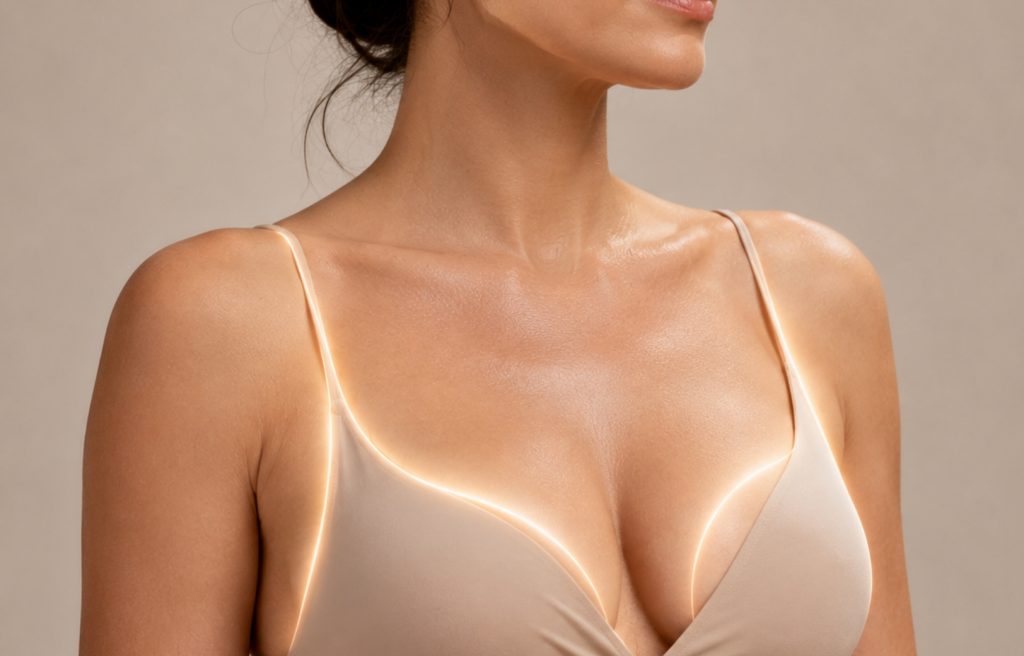
Breast augmentation is a surgical procedure that increases breast volume and improves breast shape using implants, fat grafting, or a combination of techniques. At UVA Aesthetic Plastic Surgery in Charlottesville, Virginia, breast augmentation is carefully tailored to each patient’s anatomy, lifestyle, and goals, with an emphasis on natural proportions, long-term safety, and informed decision-making.
Breast augmentation enhances the size and contour of the breasts., typically with silicone gel implants; select patients may be candidates for fat grafting. Implant size, shape, profile, surface, placement, and incision location are individualized. Breast augmentation can improve volume and symmetry, but it does not substantially lift breasts with significant sagging. In those cases, a breast lift may be recommended with or without an implant.
What Can Breast Augmentation Improve?
Naturally small breast volume
Loss of volume after pregnancy, breastfeeding, aging, or weight change
Differences in breast size or shape
Upper-pole fullness and overall breast contour
Breast proportions relative to the chest, waist, and hips
Volume following previous breast surgery or implant removal
Who Is a Candidate?
Breast augmentation may be appropriate for patients who:
Would like greater breast volume or improved shape
Have stable breast development and a stable weight
Are in good overall health and do not use nicotine
Understand that implants are not lifetime devices
Have realistic expectations about scars, symmetry, and long-term maintenance
Are willing to follow recommendations for future breast imaging and implant surveillance
Your consultation includes an assessment of breast dimensions, skin quality, nipple position, asymmetry, chest-wall anatomy, and your desired result. These factors help determine whether augmentation alone or augmentation with a breast lift is most appropriate.
Our Breast Augmentation Surgeons
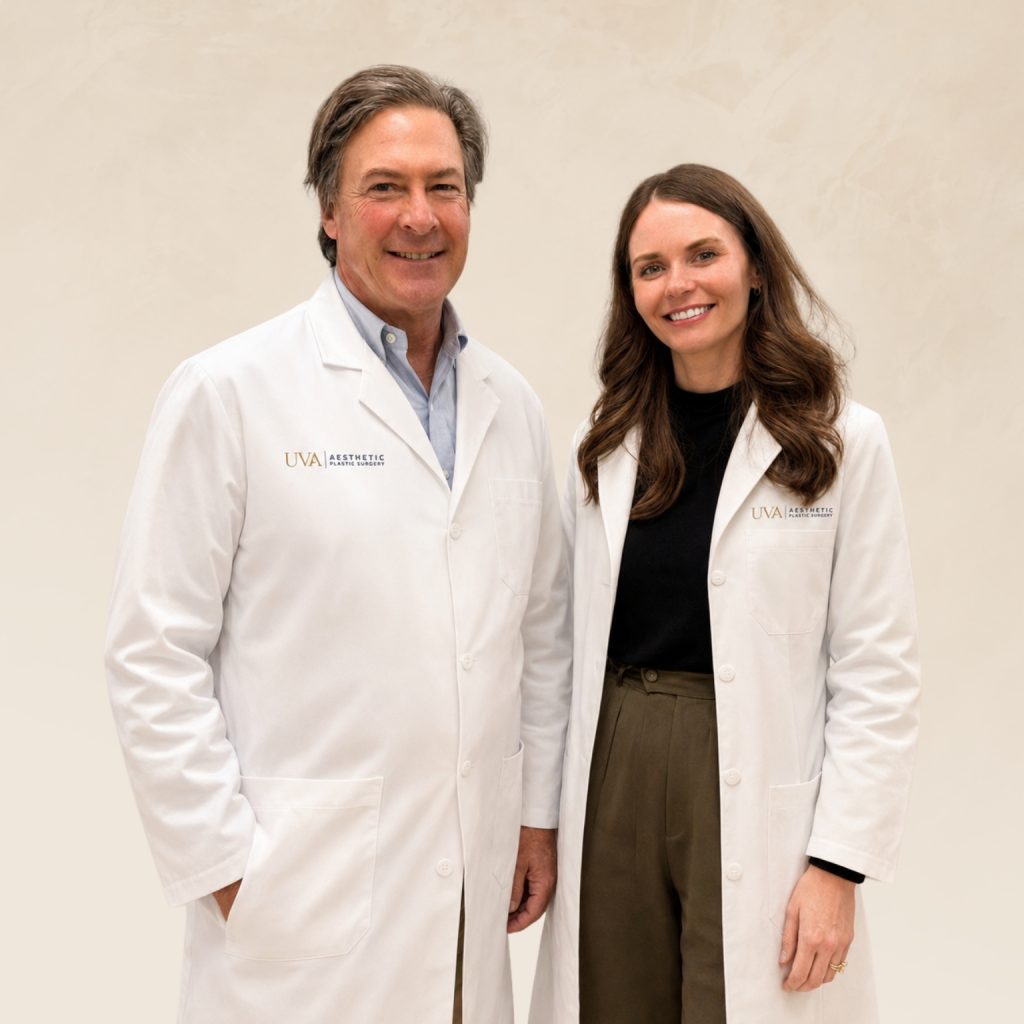
At UVA Aesthetic Plastic Surgery, our highly regarded surgeons offer expertise and personalized care for a rewarding patient experience.
Silicone gel implants are available in a range of sizes and profiles and often provide a soft, natural feel. Because rupture may not be noticeable without imaging, patients should follow recommended surveillance guidance after surgery.
Saline Implants
Saline implants are filled with sterile salt water. A rupture is usually apparent because the implant deflates, and the saline is absorbed by the body. Saline implants may have a firmer feel or more visible rippling in patients with limited soft-tissue coverage.
Fat Grafting for Natural Breast Augmentation
Natural breast augmentation with fat grafting involves harvesting fat from another area of the body with liposuction, which is then processed and carefully injected into the breasts. This option is best suited for modest volume enhancement or refinement of natural breast contours or implants. It requires adequate donor fat, and the achievable size increase is generally smaller and less predictable than with implants. Not all transferred fat survives, and more than one procedure may be needed.
Where Are Breast Augmentation Incisions Placed?
Our surgeons typically perform breast augmentation with an inframammary incision placed in the crease beneath the breast because it provides clear access to the surgical area, and the resulting scar is not easily noticeable. Other incisions may be considered in selected cases.
Where Is the Implant Placed?
Above the Muscle
Subglandular placement positions the implant beneath the breast tissue and above the pectoralis muscle. It may be appropriate for patients with adequate soft-tissue coverage and can avoid animation of the implant with chest-muscle contraction.
Below the Muscle or Dual Plane
Submuscular or dual-plane placement provides additional tissue coverage over the upper portion of the implant. This can reduce visible implant edges or rippling in selected patients, although temporary muscle tightness and animation can occur.
There is no single placement that is best for every patient. Your surgeon will recommend an approach based on your anatomy, implant selection, activity level, and aesthetic goals.
How Is Breast Augmentation Performed?
Breast augmentation is performed using either local anesthetic with IV sedation or general anesthetic, usually as an outpatient procedure. A small incision is created, most commonly in the crease beneath the breast. A space for the implant (called the pocket) is developed above or partially beneath the chest muscle, and the selected implant is placed. The incisions are then closed in layers. Surgical planning is customized to achieve the best balance of breast shape, soft-tissue coverage, implant position, and recovery.
Can Breast Augmentation Be Combined With Other Procedures?
Depending on your goals, breast augmentation may be combined with:
Many women combine breast augmentation with other procedures as part of a comprehensive postpartum body contouring plan for a mommy makeover.
What Is Recovery Like?
After breast augmentation, patients are usually ready to return to school and nonstrenuous work and activities within a week.
Week 1
Expect temporary soreness, swelling, tightness, and changes in sensation.
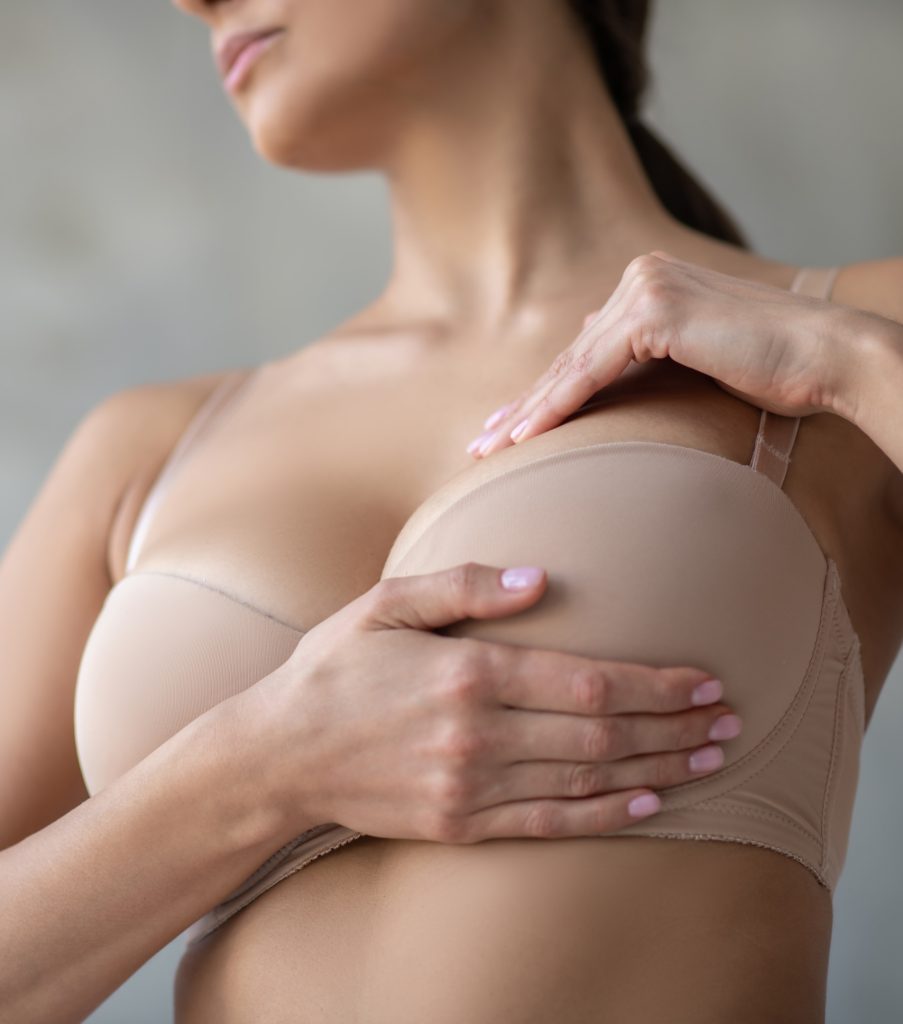
You will be asked to wear a supportive postoperative bra as directed.
Light walking is encouraged, but lifting and strenuous activity are restricted.
Your implants may feel firmer and be higher on your chest than desired until swelling fades and tissues relax.
Many patients return to desk-based work within several days to 1 week.
Weeks 2-6
Swelling and tightness gradually improve.
Implants begin to soften and settle into a more natural position.
Activity is increased gradually according to your surgeon’s instructions.
Upper-body exercise and heavy lifting may remain restricted for several weeks.
Long Term
Breast shape continues to soften and settle over several months.
Incisions fade gradually but do not disappear completely.
Breast appearance will continue to change with aging, pregnancy, and weight fluctuation.
Future imaging, implant monitoring, or revision surgery may be needed.
Breast Augmentation Risks and Considerations
Potential risks include bleeding, infection, delayed healing, changes in nipple or breast sensation, scarring, asymmetry, implant malposition, rippling, capsular contracture, implant rupture or deflation, fluid collections, pain, dissatisfaction with size or shape, interference with breast imaging, and the need for revision surgery. Rare implant-associated conditions will also be discussed during consultation. Breast implants are not considered lifetime devices, and additional surgery may be needed in the future.
Breast Screening and Implant Follow-Up
Breast implants do not eliminate the need for routine breast health screening. Patients should continue age- and risk-appropriate mammography and inform the imaging center that they have implants. Patients with silicone gel implants should also follow current recommendations for implant surveillance imaging. Your surgeon will review the appropriate long-term follow-up plan for your implant type and medical history.
Why Choose UVA Aesthetic Plastic Surgery?
Experienced plastic surgeons with specialized aesthetic breast surgery training
Detailed measurements and individualized implant selection
Thoughtful counseling about implant type, placement, scars, and long-term maintenance
Academic medical center resources and safety standards
Commitment to natural-looking, proportionate results
Comprehensive postoperative care and long-term follow-up
Insight From Our Surgeons
Implant placement should be individualized rather than determined by what is currently popular. Our surgeons consider factors such as a patient’s anatomy, tissue coverage, implant choice, lifestyle, and aesthetic goals when determining whether implant placement above or below the muscle is most appropriate.
Breast Augmentation FAQ
How do I choose the right implant size?
Implant selection is based on your breast and chest measurements, tissue quality, desired appearance, and lifestyle. Rather than choosing by cup size alone, your surgeon will help identify a range of implants that safely fits your anatomy and goals.
Will I lose nipple sensation?
Temporary changes in sensation are common. Permanent decreased or increased sensation can occur, although most patients retain useful nipple and breast sensation.
Can I breastfeed after breast augmentation?
Many patients can breastfeed after augmentation, but there is no guarantee. Our surgeons recommend postponing surgery if you’re considering pregnancy and breastfeeding in the near future to avoid impacting the results of surgery.
How long do breast implants last?
There is no fixed expiration date, and implants do not need to be replaced solely because a certain number of years has passed. However, they are not lifetime devices and may require future surgery because of rupture, capsular contracture, position changes, or personal preference.
How will implants affect mammograms?
Mammography can still be performed, but additional implant-displacement views are often used. Tell the imaging facility that you have breast implants before your appointment.
What happens if an implant ruptures?
A saline implant usually deflates visibly. Silicone implant rupture may be silent and detected through imaging. Ruptured implants generally require surgical evaluation and often removal or replacement.
What is capsular contracture?
The body naturally forms a thin layer of scar tissue around an implant. Capsular contracture occurs when this tissue becomes unusually tight or firm, potentially causing discomfort or a change in breast shape. Additional treatment or surgery may be needed.
Your Next Step
To learn more about breast augmentation at UVA Aesthetic Plastic Surgery in Charlottesville, request a consultation using the online from or call
(434) 924-5078 for an appointment with one of our plastic surgeons.