What Is Rhinoplasty?
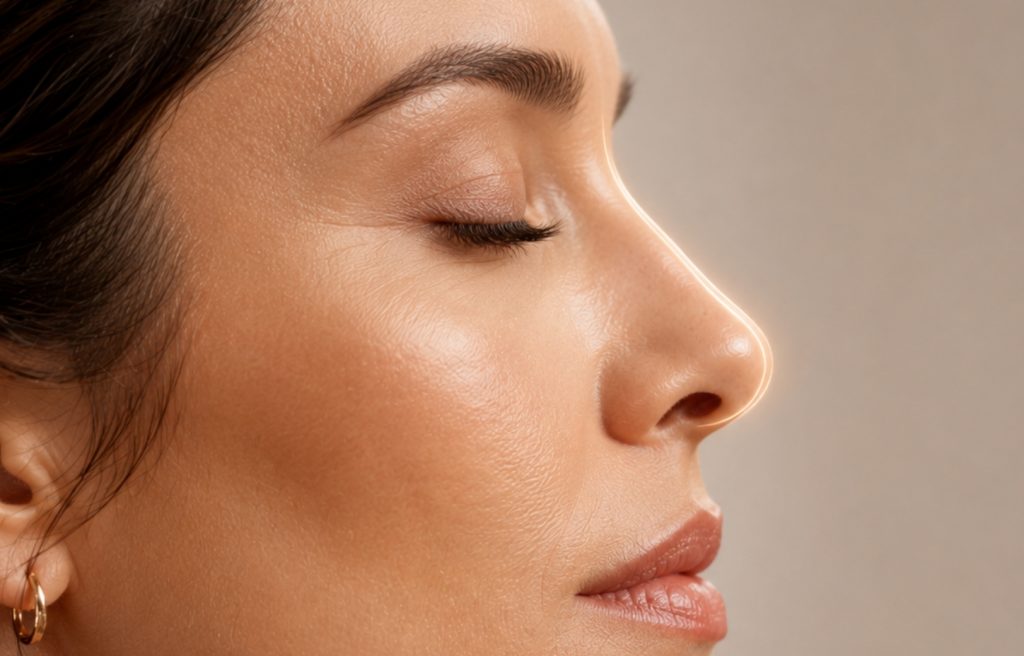
Rhinoplasty is a surgical procedure that reshapes the nose by modifying the underlying bone, cartilage, and soft tissue. Cosmetic rhinoplasty is performed to improve the size, shape, and proportion of the nose while preserving or enhancing overall facial harmony.
- A prominent hump along the bridge
- A wide or bulbous nasal tip
- A drooping or overly projected tip
- A crooked or asymmetric nose
- A nose that appears too large or too small for the face
- Wide nostrils
For patients who also experience nasal obstruction or breathing difficulties, functional procedures such as septoplasty or nasal valve repair may be performed at the same time.
Who Is a Candidate for Rhinoplasty?
Ideal rhinoplasty candidates meet the following criteria:
- Are bothered by the appearance of their nose or facial profile
- Have realistic expectations for their results
- Are in good overall health
- Have completed facial growth (typically age 15–16 for females and 16–17 for males)
- Do not smoke or are willing to stop before surgery
During your consultation, your surgeon will discuss your goals and determine whether rhinoplasty is the right procedure for you.


How Is Rhinoplasty Performed?
Every rhinoplasty is carefully customized to the individual patient. Depending on your anatomy and surgical goals, your surgeon may recommend either an open rhinoplasty or a closed rhinoplasty approach.
- Open rhinoplasty uses a small incision across the columella (the tissue between the nostrils), allowing excellent visualization of the nasal structures.
- Closed rhinoplasty places all incisions inside the nostrils, avoiding an external incision in select patients.
Rhinoplasty is typically performed as an outpatient procedure under general anesthesia. During surgery, your surgeon carefully reshapes the nasal bones and cartilage to create improved balance and proportion while maintaining structural support and long-term stability.
Whenever possible, conservative techniques are used to preserve the natural character of the nose while achieving meaningful aesthetic improvement.

Our Rhinoplasty Surgeons
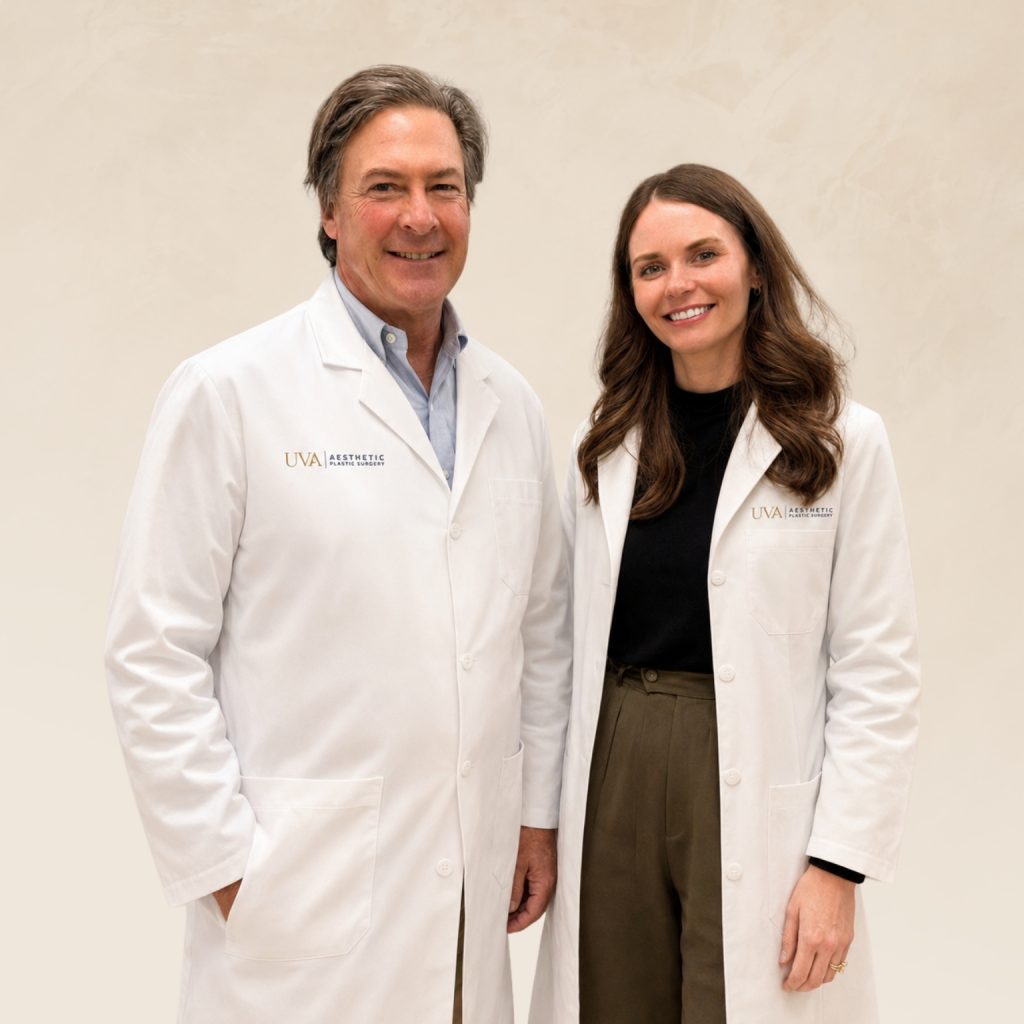
At UVA Aesthetic Plastic Surgery, our highly regarded surgeons offer expertise and personalized care for a rewarding patient experience.
Can Rhinoplasty Be Combined With Other Procedures?
Yes, many patients combine rhinoplasty with other facial plastic surgery procedures for more comprehensive improvements:
During your consultation, your surgeon will recommend a personalized treatment plan based on your goals.

What Is Rhinoplasty Recovery Like?
Most patients return home the same day after surgery with a small splint on the nose. Swelling and bruising around the eyes are expected during the first week and gradually improve over time.
Recovery Timeline
While recovery after a facelift varies with the specifics of each surgery and individual patient factors, it generally proceeds along the following timeline:
Week 1
- Rest and avoid strenuous activity.
- Swelling and bruising are most noticeable during the first several days.
- Nasal splint is typically removed after 1 week.
- Many patients feel comfortable returning to work or school after splint removal.
Week 2-4
- Bruising has largely resolved.
- Most swelling continues to improve.
- Light exercise may gradually resume as directed by your surgeon.
Long Term
- Nasal swelling continues to improve over several months.
- Most patients appreciate significant improvement within several weeks, but subtle refinement, particularly of the nasal tip, continues for up to 1 year after surgery.
Why Choose UVA Aesthetic Plastic Surgery?
- Fellowship-trained surgeons with expertise in advanced rhinoplasty techniques
- Personalized surgical plans tailored to each patient’s facial anatomy
- Academic medical center resources
- Commitment to natural-looking, balanced results
- Patient safety at every stage
Insight From UVA Plastic Surgeons
Swelling can last up to a year after rhinoplasty, and it may take that long to see your final results. During recovery, some patients may benefit from steroid injections to help reduce persistent swelling and optimize their outcome.
Rhinoplasty FAQ
Which is better, closed or open rhinoplasty?
Both approaches can produce excellent results. Your surgeon will recommend the technique that provides the best access to achieve your specific goals while preserving nasal support and function.
Can rhinoplasty improve my breathing?
Yes. If you have a deviated septum or other structural causes of nasal obstruction, functional procedures can often be performed at the same time as cosmetic rhinoplasty.
Will my nose look natural?
Yes. Our goal is to create a nose that complements your facial features while preserving your unique appearance and facial harmony.
When will I see my final results?
Although patients notice an improvement after the splint is removed, swelling continues to resolve for up to 1 year, particularly in the nasal tip.
Will I have visible scars?
Most rhinoplasty incisions are hidden inside the nostrils. If an open rhinoplasty is performed, the small incision across the columella typically heals very well and becomes difficult to notice over time.
Your Next Step
To learn more about rhinoplasty at UVA Aesthetic Plastic Surgery in Charlottesville, request a consultation with one of our plastic surgeons using the online form or call (434) 924-5078 to schedule an appointment.

Reviewed for clinical accuracy by an UVA Aesthetic Plastic Surgery Medical Editor on October 2nd, 2026.